Best Espresso Machines 2026: Ranked by Budget and Level
- The grinder still comes first: budget at least 40 percent for it, because the machine reveals a good grind but cannot fix a bad one
- Under 500 EUR: Gaggia Classic Evo Pro (around 449 EUR, upgradeable classic, 9 bar from the factory) or Sage Bambino (around 279 EUR, three-second heat-up, manual steam wand)
- 500 to 700 EUR: Sage Barista Express (around 529 EUR, grinder built in) or Lelit Anna PID (around 499 EUR, PID temperature control)
- 950 EUR and up: Lelit MaraX (around 989 EUR, heat exchanger) or Rocket Appartamento (around 1149 EUR, full E61)
- Around 1335 EUR: ECM Classika PID, a single-boiler E61 with room to grow into flow control
Which espresso machines are worth their price in 2026?
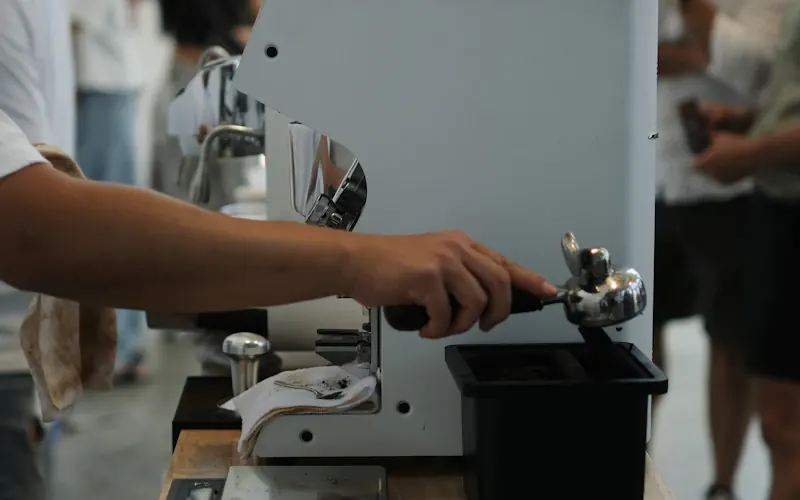
Seven of them, from the Gaggia Classic Evo Pro at around 449 EUR to the ECM Classika PID at around 1335 EUR. Before the list, here is the sentence that saves most people a small fortune. The espresso machine is not the most important purchase you will make, the grinder is, and the machine only ever reveals what a good grind has already decided. I learned this the slow way, having watched a friend in Ghent pour mediocre shots from a beautiful 1200 EUR machine for a year, then transform the very same machine overnight by pairing it with a proper burr grinder. So treat every price below as half of a setup, never the whole story.
With that caveat planted, here is our selection of the best espresso machines in 2026, chosen for thermal stability, build quality, long-term reliability and honest value. Every price is indicative and verified at European retailers in euros (an EU and Belgian audience deserves real EUR pricing, not a currency-converted guess), and prices shift with stock, colour variant and promotions, so read them as a September 2026 snapshot and an order of magnitude, never a firm quote.
| Machine | Type | Key feature | Indicative price (EUR) | Best for | Buy |
|---|---|---|---|---|---|
| Gaggia Classic Evo Pro | Single boiler | Repairable, 9 bar from the factory | ~449 EUR | Beginner to tinkerer, espresso first | Check price on Amazon |
| Sage Bambino | Thermojet | 3-second heat-up, PID, manual wand | ~279 EUR | Beginner, small kitchens, milk drinks | Check price on Amazon |
| Sage Barista Express | Thermocoil, built-in grinder | All-in-one, conical burrs | ~529 EUR | One-box convenience, no separate grinder | Check price on Amazon |
| Lelit Anna PID | Single boiler, PID | Prosumer feel, low price | ~499 EUR | Enthusiast stepping up from entry | Check price on Amazon |
| Lelit MaraX | Heat exchanger, E61 | No-flush HX, dual modes | ~989 EUR | Serious home barista, milk and espresso | Check price on Amazon |
| Rocket Appartamento | Heat exchanger, E61 | Compact, iconic build | ~1 149 EUR | Design-led prosumer, lasting investment | Check price on Amazon |
| ECM Classika PID | Single boiler, E61, PID | Espresso-first precision | ~1 335 EUR | Espresso purist, flow-control ready | Check price on Amazon |
* These links may earn a commission if you make a purchase, at no extra cost to you. Prosumer machines (Lelit, Rocket, ECM) are often easier to find at specialist European espresso retailers. Learn more.
Which budget fits which kind of espresso drinker?
Four brackets, and each one matches a drinking habit more than a wallet: under 500 EUR you learn the craft, between 500 and 700 EUR you pick between convenience and precision, from 950 EUR you are buying thermal stability, and around 1335 EUR you are buying espresso purity.
Under 500 EUR: starting without regret
Two very different characters share this bracket. The Gaggia Classic Evo Pro (around 449 EUR) is the upgradeable classic: a commercial 58 mm stainless portafilter, a single coated aluminium boiler, a real steam wand and, since the 2023 revision, an OPV set at the factory to 9 bar at the group. The chassis has spawned an entire modding culture (PID kits, bottomless baskets, OPV springs), it rewards patience, and it lasts. The Sage Bambino (around 279 EUR) takes the opposite path: a Thermojet block that reaches 93 degrees Celsius in about three seconds, PID-controlled brew temperature and a single-hole steam wand you work yourself. Worth correcting a common shortcut here: automatic milk texturing belongs to the pricier Bambino Plus, not to the base Bambino, which needs practice with the jug. It stays the friendliest first machine for small kitchens, where the Gaggia is the one to choose if you love espresso straight and enjoy the journey of improving it. Pair either with a Baratza Encore ESP (around 149 EUR) and you have a genuinely good setup under 650 EUR.
500 to 700 EUR: the convenience and precision fork
Here the road splits between all-in-one and a step toward prosumer. The Sage Barista Express (around 529 EUR) bundles a conical burr grinder, dose control and a steam wand into one box: it is the simplest way to go from beans to a flat white on a single counter, and the integrated grinder is decent enough to start, though it remains the weak link you may upgrade later. The Lelit Anna PID (around 499 EUR) goes the other way, a compact single boiler with proper PID temperature control and Italian build, the natural stepping stone for someone who wants prosumer feel and an external grinder rather than a tidy all-in-one. Choose convenience and a single footprint with the Barista Express, or modularity and a clear upgrade path with the Anna.
950 EUR and up: the serious home barista
This is heat-exchanger and E61 territory, where machines are built for the next ten to fifteen years. The Lelit MaraX (around 989 EUR) is the smart pick: an HX design with electronic control that lets you brew and steam without the usual flush-and-wait dance, plus two selectable modes for espresso-led or milk-led workflows. The Rocket Appartamento (around 1149 EUR) is the design icon, a compact full E61 heat exchanger with cutout side panels and a build that feels generational, ideal for those who want a machine to admire as much as to use. Both deliver café-style steam power and the thermal mass of an E61 group, the difference being workflow cleverness (MaraX) versus presence and pedigree (Appartamento).
Around 1335 EUR: the espresso purist
The ECM Classika PID (around 1335 EUR) takes a deliberate stance: a single-boiler E61 machine with PID, designed by a German house in Heidelberg and hand-assembled in Milan like the rest of ECM's home line, focused on extracting the cleanest possible espresso. It steams capably for the occasional cappuccino but does not pretend to be a milk machine, and that focus is the point. It is the choice for the espresso purist who values temperature precision and the option to add flow control over the convenience of simultaneous milk steaming, and it ages gracefully thanks to excellent parts support.
How much thermal mass do you actually need in a home machine?
Enough to survive the shot you are pulling, which is a lower bar than the forums suggest. A thermoblock holds almost none and compensates with speed; a brass E61 group holds several kilos of it and compensates with inertia. Between those two extremes sit the six builds below.
PID (Proportional-Integral-Derivative): an electronic temperature controller. It holds brew water to roughly half a degree Celsius, against the 5 to 10 degree swing of a basic thermostat. Indispensable from the mid tier upward, and the reason a 1 degree tweak can reshape a light-roast shot.
Single boiler: one boiler for both brewing and steaming, with a 30 to 60 second wait to switch between them. Perfect for espresso-led drinking and the occasional milk drink, as on the Gaggia Classic Evo Pro, Lelit Anna and ECM Classika.
Thermoblock and Thermojet: a heating block that warms water on demand rather than holding a tank of it, so the machine is ready in seconds. It trades a little thermal mass for speed and compactness, which is exactly the Sage Bambino trade-off.
Heat exchanger (HX): a steam-temperature boiler with a coil that draws fresh water through it for brewing, so you can extract and steam with no real delay. The Lelit MaraX and Rocket Appartamento both use this, with the MaraX adding electronics to remove the traditional flush.
Dual boiler: two independent boilers, one for espresso and one for steam, allowing simultaneous brewing and steaming with the best thermal stability. It is the gold standard for heavy milk-drink households, and it starts around 1000 EUR with the Sage Dual Boiler, considerably higher among E61 prosumer builds.
E61 group: a commercial brew group with a thermosiphon pre-infusion chamber and high thermal mass, prized for stability and longevity. It is the de facto standard across the prosumer tier, found on the MaraX, Appartamento and Classika PID.
Which matters more on your counter, steam power or a stable brew temperature?
Count your milk drinks for a week and the answer settles itself. Two flat whites a day and steam wins; two straight espressos and stability wins. Here is how that plays out across the five things worth checking.
Thermal stability over headline temperature: a machine that holds 93 degrees Celsius within half a degree across the whole 25 to 35 second shot beats one that reads 93 but swings between 90 and 96. Stability is what PID and high-mass E61 groups buy you, and it matters most for light to medium specialty roasts.
Steam power for milk: if flat whites and cappuccinos are your daily ritual, prioritise steam. The base Bambino asks you to work its single-hole wand by hand, forgiving because the Thermojet returns to temperature almost instantly, while the HX and E61 machines give you full manual control over microfoam with far more boiler behind it. A single boiler steams fine for the occasional milk drink but asks you to wait between brewing and steaming.
Portafilter size: 58 mm commercial portafilters (Gaggia, Lelit, Rocket, ECM) open the door to a vast accessory ecosystem of baskets, tampers and bottomless options, which the smaller proprietary sizes on some compact machines do not, the Bambino sticking to 54 mm.
Repairability and parts: a machine you can service is worth more than a sealed one at the same price. Italian and German prosumer brands tend to offer strong long-term parts support in Europe, and the Gaggia Classic is famous for being almost endlessly serviceable.
Integrated versus separate grinder: an all-in-one like the Barista Express is convenient, but if either half fails the whole unit is down, and you cannot upgrade the grinder alone. A separate machine and grinder costs a little more space and money but gives a better cup and easier upgrades above roughly 600 EUR total.
Which mistakes turn a good espresso machine into a disappointment?
Five recurring ones, and the first is by far the most expensive.
- Spending everything on the machine: an 800 EUR machine fed by a 50 EUR grinder is wasted money. Move budget toward the grinder and the very same machine improves overnight.
- Trusting the bar number: 15 bar on the box is the pump rating, not brew pressure. The SCA reference is 9 bar at the group, set by an OPV, so the headline figure tells you nothing about cup quality.
- Buying a single boiler for a milk-heavy household: if you make several cappuccinos in a row, the wait to switch between brew and steam grows tiresome. An HX or dual boiler suits that use far better.
- Ignoring water hardness: in hard-water cities like Brussels or Liège, descaling and good filtration are not optional. Limescale shortens the life of every machine here, prosumer ones included.
- Confusing pressurised baskets with quality: the dual-wall baskets shipped with many entry machines flatter bad grinders by faking crema. They are a training aid, not a destination, so move to a single-wall basket once your grinder is up to it.
Frequently asked questions about espresso machines
What is the best espresso machine in 2026?
There is no single best, only the best for your budget and how much milk you steam. Under 500 EUR, the Gaggia Classic Evo Pro (around 449 EUR) is the upgradeable classic and the Sage Bambino (around 279 EUR) the easy starter. From 500 to 700 EUR, the Sage Barista Express (around 529 EUR) bundles a grinder and the Lelit Anna PID (around 499 EUR) steps toward prosumer. From 950 EUR up, the Lelit MaraX (around 989 EUR) and Rocket Appartamento (around 1149 EUR) bring HX and E61 builds, and the ECM Classika PID (around 1335 EUR) is the espresso-first single boiler. Always budget at least 40 percent for the grinder.
How many bars of pressure do you need for good espresso?
Nine bar at the group head is the SCA reference, and it is a benchmark rather than a rule anyone is obliged to follow. The 15 bar printed on many boxes is the pump rating, not the brew pressure, which an OPV (over-pressure valve) regulates down to roughly 8 to 9 bar. On prosumer machines the OPV is adjustable and many users set it between 8 and 9 bar to taste. A machine claiming 15 bar with no adjustable OPV tends to over-extract, so the bar figure is marketing, not a quality signal.
Which espresso machine is best for latte art?
Latte art lives or dies on the steam wand. The Sage Bambino (around 279 EUR) is a forgiving starting point because its Thermojet recovers steam pressure almost instantly, though you texture the milk by hand; the automatic version is the Bambino Plus. For full manual control of microfoam, heat-exchanger and E61 machines like the Lelit MaraX (around 989 EUR) and Rocket Appartamento (around 1149 EUR) give the steam power and instant switching that pour-quality milk needs. Steam pressure and boiler power are the two parameters that matter most.
Is a machine with a built-in grinder a good idea?
All-in-one machines like the Sage Barista Express (around 529 EUR) are convenient and tidy on the counter, but they come with a trade-off: if the grinder or the brew unit fails, both are out of action, and you cannot upgrade the grinder alone. A separate machine and grinder lets you optimise and replace each part independently. Above roughly 600 EUR total, a separate setup usually gives a better cup than an equivalent all-in-one.
Ready to pull your first home shot?
See the best espresso machines on Amazon →Further reading: Best coffee grinders 2026 · Specialty coffee FAQ · Coffee glossary
Affiliate links: as an Amazon Associate, expertcafe.be earns from qualifying purchases at no extra cost to you. Learn more.