Best Coffee Scales and Gooseneck Kettles 2026
- After the grinder, the scale and the kettle are the two tools that make a recipe repeatable: weigh to 0.1 g, pour at a chosen temperature
- Scales: Acaia Pearl (around 219 EUR) for filter, Acaia Lunar (around 349 EUR) for espresso, Timemore Black Mirror Basic 2 (around 79 EUR) the best value
- Budget scale: Hario V60 Drip Scale (around 65 EUR), but its 0.1 g display stops at 200 g; affordable espresso: Timemore Black Mirror Nano (around 115 EUR) or Felicita Arc (around 179 EUR)
- Gooseneck kettles: Fellow Stagg EKG (around 229 EUR) the design reference, Brewista Artisan (around 199 EUR) and Hario V60 Power Kettle Buono (around 199 EUR) the safe picks, Timemore Fish (around 149 EUR) the compact entry
- Always choose a kettle with temperature control: it is the single most important lever in pour-over
Which coffee scale is worth its price in 2026?
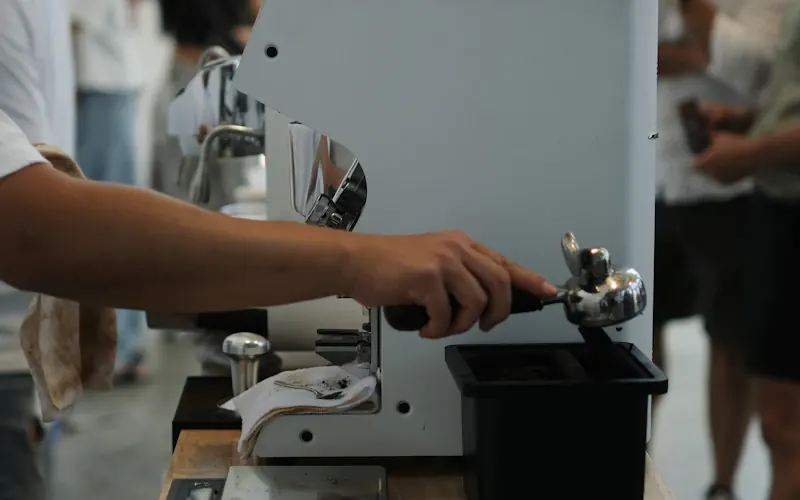
Here is a truth every specialty barista eventually meets. Once the grinder is sorted, it is the scale that separates random coffee from repeatable coffee. Weighing to a tenth of a gram turns a hunch into a recipe, and a recipe into progress. One caveat about the phrase "0.1 g", though: some scales hold that resolution across their whole range, others only over the first couple of hundred grams, and the spec sheet rarely says so out loud. The prices below are ballpark figures seen at European retailers in euros in September 2026 (a Belgian and EU audience deserves EUR, not a currency-converted guess), and they move with stock and promotions, so treat them as a current snapshot rather than a fixed tag.
| Model | Key feature | Indicative price (EUR) | Best for | Buy |
|---|---|---|---|---|
| Acaia Pearl | 0.1 g over 2 kg, real-time flow rate, 160 mm platform | ~219 EUR | Filter and pour-over, the reference | See price on Amazon |
| Acaia Lunar | 15 mm tall, water-resistant, 0.01 g option | ~349 EUR | Espresso, sits under the portafilter | See price on Amazon |
| Timemore Black Mirror Basic 2 | 0.1 g, flow rate, 2 kg capacity | ~79 EUR | Best value for filter | See price on Amazon |
| Timemore Black Mirror Nano | 2 cm tall, 0.1 g over 2 kg, flow rate | ~115 EUR | Affordable espresso, small trays | See price on Amazon |
| Hario V60 Drip Scale | 0.1 g from 2 to 200 g, then 0.5 g and 1 g, timer | ~65 EUR | Starting pour-over without overspending | See price on Amazon |
| Felicita Arc | 0.1 g over 2 kg, flow rate, five modes, IPX5 | ~179 EUR | Espresso and filter, mid range | See price on Amazon |
* These links may earn a commission if you buy, at no extra cost to you. Learn more.
The Acaia Pearl (around 219 EUR) remains the benchmark for filter. Acaia publishes 0.1 g increments across a 2 kg capacity and, unusually, the settling time that goes with them: one second at that division. Repeatability, what the scale can reproduce twice in a row, sits on no spec sheet at all and is judged in use. Add the built-in timer and the real-time flow rate (grams poured per second) and you have a teaching tool as much as a measuring instrument, on a 160 mm platform wide enough for a server. For espresso, the Acaia Lunar (around 349 EUR) brings the same mechanics in a 15 mm body treated against water, designed to live under the portafilter, with an optional 0.01 g step if you want it.
On a budget, the Timemore Black Mirror Basic 2 (around 79 EUR) is my best value: 0.1 g, flow rate, 2 kg of capacity and a responsiveness that rivals far pricier scales. The Timemore Black Mirror Nano (around 115 EUR) is its espresso variant, 2 cm tall, flat enough to slide between drip tray and portafilter. The Hario V60 Drip Scale (around 65 EUR) is the most reliable way to start pour-over, with one caveat worth knowing: it shows tenths of a gram from 2 to 200 g, then moves to half-gram steps up to 500 g and whole grams beyond. For a coffee dose that changes nothing; for reading 300 g of poured water, the decimal is gone. Finally the Felicita Arc (around 179 EUR) holds 0.1 g across 2 kg, tracks flow, offers five working modes including two for espresso and claims an IPX5 rating, which makes it genuinely at home on both sides of the counter.
Which gooseneck kettle belongs next to your dripper?
The gooseneck gives a thin, steerable stream, and to-the-degree temperature control tunes extraction to the roast. Those two functions are the core of a good pour-over kettle. A third number deserves attention and almost nobody advertises it: the span the thermostat actually covers, which differs from model to model and sometimes stops short of boiling. Here are the four models that lead in 2026, with prices seen at European retailers.
| Model | Key feature | Indicative price (EUR) | Best for | Buy |
|---|---|---|---|---|
| Fellow Stagg EKG | To-the-degree control, 0.9 L, stopwatch, counterbalanced handle | ~229 EUR | The design and control reference | See price on Amazon |
| Brewista Artisan | Variable temperature, 1 L, timer, flash boil, hold heat | ~199 EUR | Coffee and tea versatility, larger volume | See price on Amazon |
| Hario V60 Power Kettle Buono | 60 to 96 C, 0.8 L, 15 min hold | ~199 EUR | Reliable classic pour-over | See price on Amazon |
| Timemore Fish | 600 ml, 40 to 100 C in single degrees, tapered spout | ~149 EUR | Starting out, small spaces, tight budget | See price on Amazon |
* Affiliate links, possible commission at no extra cost to you. Prices seen at European retailers in September 2026, as ballpark figures.
The Fellow Stagg EKG (around 229 EUR) is the reference: a to-the-degree setpoint, a built-in brew stopwatch, a hold function and a counterbalanced handle that makes pouring remarkably steady even at a slow flow, all on 0.9 litres. The Brewista Artisan (around 199 EUR) offers variable temperature control, shows a timer on its LCD panel and adds flash boil and hold heat on 1 litre, handy for several cups in a row or for switching between coffee and tea. The Hario V60 Power Kettle Buono (around 199 EUR) leans on proven Japanese simplicity, with a thin spout famous for its precise pour, but note its ceiling: the setpoint runs from 60 to 96 C, with a fifteen-minute hold as long as the kettle stays on its base. Finally the Timemore Fish (around 149 EUR) is the most appealing way in: 600 ml, a tapered spout, a setpoint anywhere from 40 to 100 C in single degrees and a minimal footprint that suits small counters.
Which of the four brewing variables does each tool actually own?
The division of labour is clean. Good coffee comes down to four variables you steer yourself: brew ratio, time, temperature and flow. The scale hands you the first two, the kettle the third, the gooseneck the fourth. Neither instrument covers for the other, which is exactly why they get bought together.
Weighing to 0.1 g. A typical filter recipe sits around 1 g of coffee to 16 or 17 g of water. On an 18 g dose, a one-gram error is already five to six percent of ratio drift, enough to swing the cup from sour and under-extracted to bitter and over-extracted. Weighing to a tenth of a gram, coffee then water, makes the recipe repeatable: 18 g to 300 g in 2 min 30 today, identical tomorrow. Two numbers hide behind that promise and manufacturers rarely separate them: readability, the fineness of the display, and repeatability, the spread between two weighings of the same object. Only the first one gets published, 0.1 g on the Pearl as on the Black Mirror Basic 2; the second you learn at the counter. The flow display (grams poured per second) goes further still: it teaches you to slow down or speed up your pour in real time, which acts directly on agitation and therefore on extraction.
To-the-degree temperature control. Hotter water extracts faster and harder. Filter brewing lives mostly between 90 and 96 C, and inside that window the choice follows the roast and your palate: a light roast, denser and more acidic, opens up around 94 to 96 C; a darker roast, more soluble, often shows better a notch lower, around 88 to 92 C, to avoid bitterness. Without control you pour water at 100 C that rarely fits. One more measurement caveat: the number a kettle displays is what its probe reads, not what reaches the grounds, and the gap widens as the pour gets long and thin. The gooseneck completes the equation on flow: a thin, slow stream wets the grounds evenly, without gouging a crater in the bed, which keeps extraction even from edge to edge of the filter.
How much resolution and how much heat range do you actually need?
Scale, real resolution and response. Aim for 0.1 g, but read the spec sheet to the end: the question is not only whether a scale shows tenths of a gram, it is up to what load it keeps doing so. The Hario V60 Drip Scale holds 0.1 g from 2 to 200 g and then lets go, while the Acaia Pearl, the Timemore Black Mirror Basic 2 and the Felicita Arc quote it across their full 2 kg. The second number, rarely printed on the box, is settling time: a slow scale always leaves you pouring late, and that lateness is paid in grams.
Scale, how much room it takes. For espresso, the platform must be flat and stable enough to fit under the portafilter: 15 mm for the Lunar, roughly 2 cm for the Black Mirror Nano. For filter, a wider surface holds the carafe or server, which is why the Pearl measures 160 mm a side.
Scale, tolerance to water. Under a portafilter, splashes are inevitable. Espresso-minded models, the Lunar first among them, are treated to tolerate them and the Felicita Arc claims an IPX5 rating; protect the others with a film or a mat, or the load cell will drift.
Kettle, setpoint range and step size. Non-negotiable for pour-over, and two figures matter: the limits and the increment. The Timemore Fish covers 40 to 100 C, the Brewista Artisan the same span to the degree, the Fellow Stagg EKG 57 to 100 C, and the Hario V60 Power Kettle Buono runs from 60 to 96 C, which is plenty for filter but rules out a full boil. Add a hold function if you brew cups back to back, fifteen minutes on the Hario, up to an hour on the best-equipped models.
Kettle, spout and neck geometry. A thin gooseneck and a tapered spout give a slow, controllable stream. A counterbalanced handle, as on the Stagg EKG, steadies the wrist and keeps the flow even at the end of a pour, when the kettle gets light. Capacity follows use: 600 ml suits one or two cups, 0.8 to 0.9 litres a full carafe, 1 litre several people.
What do buyers get wrong about scales and kettles?
- Buying a kettle with no temperature control: you lose the single most important lever in pour-over. A standard wide-spout kettle allows neither the thin stream nor thermal control.
- Choosing a scale that does not show tenths of a gram: a whole-gram kitchen scale cannot reproduce a specialty coffee recipe.
- Ignoring water resistance for espresso: an unprotected scale under the portafilter wears out fast. Pick an espresso-rated model or add protection.
- Overpaying for Bluetooth: the app is pleasant but secondary. Precision, responsiveness and the timer always come before connectivity.
- Getting a kettle too large for your use: 1 litre takes longer to heat and crowds the counter. For one or two cups, a 600 ml Timemore Fish is more practical day to day.
Frequently asked questions about coffee scales and kettles
What is the best coffee scale in 2026?
The Acaia Pearl (around 219 EUR) is still the reference for filter, thanks to 0.1 g increments across 2 kg, a built-in timer and a real-time flow rate. For espresso, the Acaia Lunar (around 349 EUR) is 15 mm tall and slips under the portafilter. On a budget, the Timemore Black Mirror Basic 2 (around 79 EUR) is the best value, the Black Mirror Nano (around 115 EUR) targets espresso, the Hario V60 Drip Scale (around 65 EUR) is the most reliable entry point as long as you accept 0.1 g only up to 200 g, and the Felicita Arc (around 179 EUR) adds Bluetooth, flow and five working modes in the mid range.
Do I really need a gooseneck kettle for filter coffee?
For pour-over (V60, Chemex, Kalita), yes. The gooseneck gives a thin, slow, steerable stream that a wide spout cannot, and to-the-degree temperature control tunes extraction to the roast inside a filter window that usually runs from 90 to 96 C (94 to 96 C for a light roast, 88 to 92 C for a darker one). The Fellow Stagg EKG (around 229 EUR, 0.9 L), Brewista Artisan (around 199 EUR, 1 L, variable temperature) and Hario V60 Power Kettle Buono (around 199 EUR, 0.8 L, 60 to 96 C) cover these needs, with the Timemore Fish (around 149 EUR, 600 ml, 40 to 100 C) as the most affordable compact option.
Why does weighing coffee to a tenth of a gram change the cup?
Without 0.1 g weighing, an 18 g dose can drift by plus or minus 1 g, a five to six percent ratio error that shifts extraction from sour and under-extracted to bitter and over-extracted. A precise scale with a timer turns brewing into a measurement you can repeat: 18 g of coffee to 300 g of water in 2 min 30, made identically the next day. That repeatability is the foundation of real progress.
Ready to equip your pour-over corner?
See scales and kettles on Amazon →Further reading: Best coffee grinders 2026 · Specialty coffee FAQ · Coffee glossary
Affiliate links: as an Amazon Associate, expertcafe.be earns from qualifying purchases at no extra cost to you. Learn more.