☕ Key takeaways
- Colombia produces exclusively Arabica; distinct regions include Huila (fruity, bright acidity), Nariño (extreme altitude, delicate profile) and Antioquia (balanced, structured).
- Castillo and Caturra dominate Colombian production; specialty coffees frequently list the variety on the label, a reliable indicator of traceability and quality intent.
- Classic washed Colombian coffee is an ideal entry point for specialty exploration: a clean profile, fruity acidity and medium body that is accessible and versatile across brew methods.
Colombian Coffee Guide: Huila, Nariño, Antioquia
3 key takeaways
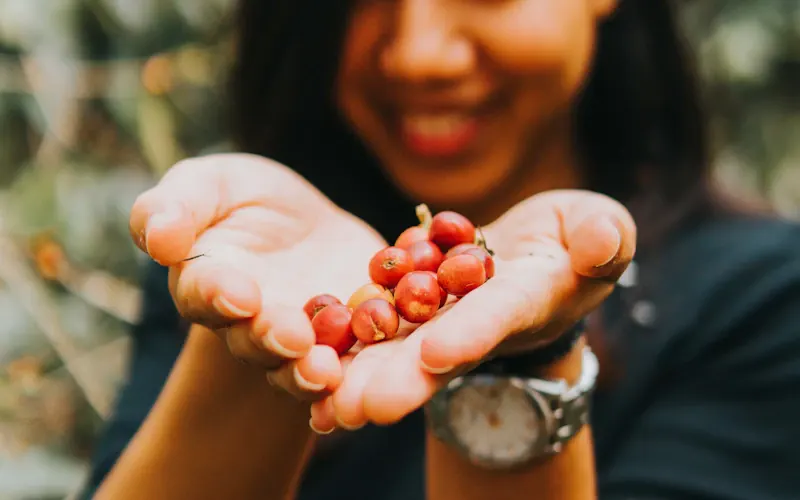
- Colombia's coffee reputation was built on a mule and a fictional farmer named Juan Valdez. But the reality behind that marketing icon is genuinely compelling, and far more…
- Colombia's two dominant varieties have shaped its cup profile for decades. Caturra, a natural Bourbon mutation introduced in the 1950s, produces clean, bright, medium-bodied…
- Belgian specialty roasters source Colombian micro-lots through specialty importers or direct trade. La Baie Coffee (Waterloo) and Naga Coffee (Rixensart) are reference specialty coffee venues in Brabant Wallon.
Colombia's coffee reputation was built on a mule and a fictional farmer named Juan Valdez. But the reality behind that marketing icon is genuinely compelling, and far more nuanced than any advertising campaign could suggest. Colombia is the world's third-largest coffee producer and the largest producer of 100% hand-harvested arabica. The three Andean cordilleras create a geography of micro-terroirs at altitudes between 1,200 and 2,300 metres, where over 550,000 farming families pick cherries by hand across multiple harvests per year. The result is an extraordinary diversity of flavour, concentrated in three regions that define the best of what Colombia can offer: Huila, Nariño, and Antioquia. This guide is for curious discoverers ready to go beyond "Colombian blend" and find the real thing.
- World's 3rd largest producer, 100% arabica, entirely hand-harvested.
- Three specialty regions: Huila (caramel-fruity), Nariño (bright-floral), Antioquia (balanced-classic).
- Dominant process: traditional washed, with a growing wave of naturals and fermentation experiments since 2018.
- Altitudes: 1,200 to 2,300 m, some of the highest coffee farms in the Americas.
What makes Colombian coffee worth discovering?
When coffee enthusiasts in Belgium pick up their first specialty bag, it's often Colombian. And that makes sense: Colombian washed coffees are approachable, clean, sweet, and forgiving across a wide range of brewing styles. But "approachable" doesn't mean simple. At 1,800-2,200 metres in Huila or Nariño, coffees develop a complexity that rewards attention and rewards repetition, each cup reveals something slightly different depending on temperature, grind size, or even the day.
Colombia has two harvesting seasons in most regions, the main crop (October to February) and the mitaca fly crop (April to June), meaning specialty roasters can source fresh Colombian lots almost year-round. That logistical advantage keeps Colombian coffee perpetually relevant on the specialty market in a way that single-harvest origins (like Ethiopia or Kenya) cannot match.
Which varieties shape Colombian coffee: Castillo, Caturra and the newcomers?
Colombia's two dominant varieties have shaped its cup profile for decades. Caturra, a natural Bourbon mutation introduced in the 1950s, produces clean, bright, medium-bodied coffees. Castillo, developed by Cenicafé and released in 2005 to combat devastating leaf rust outbreaks, was initially dismissed by specialty buyers for its "rustic" profile. Blind cupping studies have since rehabilitated it: well-grown Castillo from Huila scores 85 to 87 SCA points regularly.
The real excitement in Colombian specialty today centres on "exotic" varieties introduced from other origins: Gesha (originally Ethiopian, transplanted via Panama), Sudan Rume, and most notably the Pink Bourbon. This naturally occurring colour mutation of the Bourbon variety, found primarily in Huila, produces coffees with remarkable sweetness and tropical fruit character (peach, lychee, apricot jam) that command prices of $44 to $176/kg at direct-trade. Pink Bourbon lots are among the most talked-about in the global specialty market right now.
Why is Huila the benchmark for Colombian specialty coffee?
The department of Huila, in south-western Colombia, has become the benchmark for Colombian specialty coffee over the past decade. With altitudes reaching 2,200 metres in places like San Agustín, and two harvesting windows per year, Huila offers roasters an almost year-round supply of fresh, high-scoring micro-lots. The volcanic soil is rich and well-drained. The temperature swings between day and night are significant, up to 15°C, which slows cherry development and concentrates sugars over a longer maturation period.
A washed Huila reads as: butter caramel, red apple, muscat grape, amaretto, brown sugar, with a soft malic acidity and a velvety mouthfeel. Natural Huila (increasingly available since 2018) adds dried red fruits, honey, and sometimes a jammy sweetness that works brilliantly in espresso. The sub-zones of San Agustín, Acevedo, and Pitalito concentrate many competition-grade farms. For first-time Colombian specialty buyers, Huila is the most reliable starting point: the flavours are expressive but never aggressive.
What does extreme altitude give Nariño's Colombian coffee?
Nariño, Colombia's southernmost coffee department bordering Ecuador, pushes altitude to its limits: 1,700 to 2,300 metres, with cherry maturation cycles of 10-12 months. At these elevations, the temperature differential between day and night can exceed 20°C, a critical factor in developing the finely-structured acidity that defines Nariño's profile. The terrains are so steep that mechanisation is impossible. Pickers navigate slopes exceeding 45 degrees to harvest by hand, making Nariño one of the highest labour-cost origins in Colombia.
The reward is in the cup: a crystalline brightness, yellow lemon, dried apricot, elderflower, sometimes blackcurrant, that feels polished and precise rather than wild. The body is lighter than Huila, but the aromatic finesse is exceptional. Municipalities like La Unión, Buesaco, and San Lorenzo are the key appellations for specialty export. Nariño coffees tend to shine in filter brewing, a V60 or Chemex at 93°C, ratio 1:15 or 1:16, brings out their best.
What defines Antioquia, the cradle of Colombian coffee culture?
Antioquia is where Colombian coffee history was written. The 19th-century colonisation that spread coffee farms across the western and central cordilleras started here, and Medellín, Antioquia's capital, is now one of Latin America's most vibrant specialty coffee cities, with a concentration of micro-roasters, cafés, and barista culture that punches well above its weight globally.
Coffee from the Antioquia highlands (1,200-1,800 metres average) is generally rounder and milder than Huila or Nariño, chocolate, caramel, mild citrus, cashew, a gentle sweetness. It's the "everyday" Colombian specialty: reliable, pleasant, rarely spectacular but never disappointing. Sub-regions like Andes, Jericó, and Santa Bárbara de Antioquia are producing increasingly notable micro-lots, sometimes using Pink Bourbon or Tabi varieties that lift the profile into more interesting territory.
How is Colombian coffee processed, from washed to fermentation?
Colombia's traditional process is washed with mechanical demucilaging, a machine removes most of the mucilage without fermentation, producing clean, consistent, low-defect coffees. Since 2017, a new generation of producers has disrupted this tradition with controlled fermentation experiments: anaerobic (hermetically sealed tanks, 48-120 hours), extended aerobic fermentation, co-fermentation with tropical fruits, and yeast inoculation. These "process coffees" generate controversy in specialty circles, some find them artificially complex, others find them thrillingly expressive. The Belgian market is increasingly curious about them.
How do Colombia's three coffee regions compare?
| Region | Altitude (m) | Key varieties | Cup profile | Acidity | Harvests/year |
|---|---|---|---|---|---|
| Huila | 1,400-2,200 | Castillo, Caturra, Pink Bourbon | Caramel, apple, grape, honey | Malic, soft | 2 (main + mitaca) |
| Nariño | 1,700-2,300 | Caturra, Castillo, Típica | Lemon, apricot, elderflower | Bright, crystalline | 1-2 |
| Antioquia | 1,200-1,800 | Castillo, Caturra, Tabi | Chocolate, caramel, nut | Gentle, balanced | 2 (main + mitaca) |
How do you find great Colombian coffee in Belgium?
Look beyond the word "Colombia" on the bag. Good traceability means seeing the department (Huila, Nariño, Antioquia), ideally the municipality and farm, the variety (Caturra, Castillo, Pink Bourbon), the process, and the roast date. An SCA score above 84 points is a useful signal for quality on a Colombian specialty coffee.
Belgian specialty roasters source Colombian micro-lots through specialty importers or direct trade. For competition micro-lots (Pink Bourbon, anaerobic, Gesha), direct trade roasters and specialty coffee subscription services offer the deepest access.
"Colombia reconciled me with the idea that coffee can be both beautiful and accessible. A well-sourced Huila washed, brewed light in a V60, is often the best way to introduce someone to specialty coffee: fruity enough to surprise, gentle enough never to intimidate." Lorenzo, specialty coffee curator, expertcafe.be