☕ Key takeaways
- Coffee-savoury pairing works through acidity-umami complementarity: a washed Ethiopian with oysters is a validated pairing endorsed by a growing number of chefs.
- Coffee and aged cheese is the most underrated pairing: coffee's bitterness balances the fat and salt of a comté or parmesan in a way few expect.
- The base rule: light, acidic coffee with delicate dishes; full-bodied, dark-roast coffee with red meat or charcuterie.
Coffee and Savory Food Pairing Guide: Rules, Surprises, Experiences
3 key takeaways
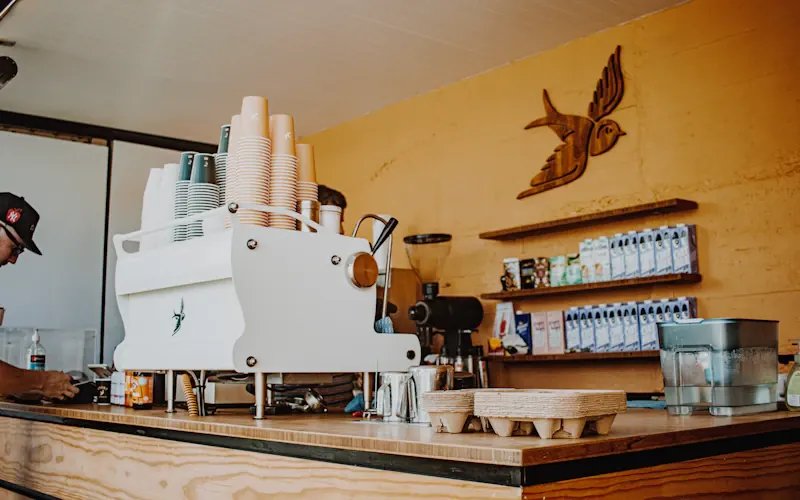
- Coffee doesn't have to end a meal. It can accompany it, cut through it, amplify it, if you understand the flavour science at work. Coffee and savory food pairings remain…
- Rule 2: Serve at the right temperature. Coffee above 75°C partially numbs the palate. Between 60-70°C, aromatic perception is optimal and the pairing can work fully.
- Rule 4: One pairing at a time. Start with a simple pairing, coffee plus one food, before exploring more complex combinations. Taste fatigue sets in quickly.
Coffee doesn't have to end a meal. It can accompany it, cut through it, amplify it, if you understand the flavour science at work. Coffee and savory food pairings remain underexplored in Western food culture, even as they're well-established in parts of East Asia and certain Mediterranean traditions. This guide lays the scientific foundations, offers concrete pairing suggestions, and ventures into a few combinations that genuinely surprise even experienced coffee drinkers.
How do acidity, bitterness, and umami shape a coffee and savory food pairing?
Coffee is chemically complex, over 800 volatile compounds have been identified. In the context of food pairings, three taste dimensions dominate:
Acidity. Washed East African coffees (Ethiopia, Kenya, Rwanda) carry a bright acidity, citric, malic, phosphoric acids. This acidity works like that of a dry white wine or a citrus fruit: it cleans the palate, cuts through fat, and stimulates salivation. It pairs well with soft-rind cheeses (brie, camembert), smoked oily fish, and fresh charcuterie (bresaola, beef carpaccio).
Bitterness. Coffee's bitterness, caffeine, chlorogenic acids, roasting compounds, has a remarkable property: it amplifies the perception of umami. The same mechanism that makes coffee and dark chocolate such natural partners also makes a dark espresso or a well-extracted robusta enhance the finish of Iberian ham, aged Parmigiano-Reggiano, or tapenade.
Umami. The fifth taste, glutamates, inosinates, is ubiquitous in aged cheeses, anchovies, dried mushrooms, soy sauce, and sun-dried tomatoes. Medium-dark roasted coffee itself contains free amino acids (notably glutamic acid, produced through the Maillard reaction) that resonate with the umami of these foods. It's no coincidence that coffee and Parmesan create a remarkably harmonious pairing.
Which coffees pair best with cheese?
Coffee-cheese pairings may be the least intuitive and most rewarding in this territory. Specific directions that work:
- Intense espresso (Robusta or Neapolitan blend) + Pecorino RomanoThe coffee's bitterness and the cheese's salt neutralise each other, revealing a buttery, nutty core that surprises.
- Washed Ethiopian coffee (floral, acidic) + Brie de MeauxThe coffee's acidity cuts through the creamy fat of the brie, very similar to brut champagne on soft-rind cheese.
- Natural Brazilian coffee (chocolatey, sweet) + 24-month ComtéComplementarity at work: the coffee's restrained fruitiness and the Comté's hazelnut, butter, and tyrosine crystals create a long, layered finish.
- Cold brew concentrate + GorgonzolaA contrast pairing. The gentle bitterness and sweetness of cold brew soften the sharpness of the blue. Unexpected and effective.
- Kenya washed coffee (blackcurrant acidity) + Fresh chèvreThe Kenya's brightness and the goat cheese's lactic tang reinforce each other. Tonic, mineral, clean.
Which coffee should you choose with charcuterie?
Charcuterie is a natural pairing territory for coffee, closer to Italian and Iberian habits than most people realise:
Dry aged charcuterie (Iberian ham, bresaola, coppa)Their high concentration of free amino acids (concentrated umami) pairs with light-to-medium espresso. The pairing works like fino sherry on Iberian ham: a union of umami and aromatic complexity.
Fatty and smoked charcuterie (lard, pancetta, dry sausages)Saturated fat calls for a more bitter, fuller-bodied coffee to cut through. A robust Neapolitan espresso or a very concentrated Turkish coffee impose themselves. The bitterness dissolves the fat and exits cleanly.
Rillettes and pâtésA successful contrast pairing with a natural filter coffee showing fruity notes (Sidama, Ethiopian Harrar). The sweetness perceived in natural coffees lightens the animal fat of the rillettes.
Why did coffee and oysters become the surprise pairing of 2024-2025?
The coffee-oyster pairing emerged in several London, Paris, and New York gastronomic coffee bars from 2023-2024. It sounds improbable, but it's sensorially coherent.
The oyster brings iodine, salt, marine minerality, and deep umami (succinic acid). A Kenya or Rwanda with high phosphoric acidity reacts similarly to Muscadet or Chablis on an oyster: the mineral acidity of the coffee amplifies the minerality of the oyster. The absence of tannins (unlike red wine) avoids the metallic clash. The effect is brief, brisk, and genuinely surprising.
Service temperature is key: coffee should be served hot (65-70°C) and in a small volume (short espresso or ristretto style) so it doesn't overpower the oyster's delicacy. A lightly citrus-brightened cold brew can also work well, as a freshness pairing.
Which savory pairing suits each coffee profile?
| Coffee profile | Typical origin | Recommended savory pairing | Mechanism |
|---|---|---|---|
| Floral, highly acidic, delicate | Washed Ethiopia (Yirgacheffe) | Fresh goat cheese, smoked salmon, oysters | Complementary acidity, shared minerality |
| Red fruit, natural, sweet | Natural Ethiopia (Sidama) | Rillettes, foie gras, mild pâtés | Sweet-fat contrast, fat lightening |
| Citrus, bright acidity, dark fruit | Washed Kenya (Kiambu) | Oily fish, bresaola, young Comté, oysters | Cutting acidity, amplified umami |
| Chocolate, nuts, balanced | Natural Brazil (Sul de Minas) | Cooked ham, 24-month Comté, roasted hazelnuts, anchovies | Complementarity: umami + nuts |
| Intense, bitter, full body | Indian Robusta, Neapolitan espresso | Aged Parmesan, coppa, dry charcuterie, tapenade | Bitterness amplifies umami, cuts salt |
| Spiced, complex, fermented | Natural Yemen (Haraazi) | Blue cheese (Gorgonzola, Roquefort), spiced grilled meats | Mirrored aromatic complexity, clean contrast |
| Soft, sweet, low acidity | Sumatra (Mandheling) | Dried mushrooms, risotto, Saint-Nectaire | Earthiness to earthiness, deep umami |
What rules should you follow and which savory foods should you avoid with coffee?
Rule 1: Match intensity. A powerful espresso with a delicate Brittany oyster will crush the product. A gentle filter coffee with a pungent Munster will disappear. As in wine pairing: intensity should answer intensity.
Rule 2: Serve at the right temperature. Coffee above 75°C partially numbs the palate. Between 60-70°C, aromatic perception is optimal and the pairing can work fully.
Rule 3: Skip the sugar. Sugar in coffee derails nearly all savory pairings by introducing an uncontrolled sweet-savory dissonance. Coffee-savory pairings are best attempted black or with minimal milk.
Rule 4: One pairing at a time. Start with a simple pairing, coffee plus one food, before exploring more complex combinations. Taste fatigue sets in quickly.
Coffee spent centuries marking the end of the meal. It has the capacity to run through every act of it, as long as you choose partners worthy of it. Savory gastronomy offers coffee a territory of exploration as rich as pastry, but far less charted.
How does salt change the way coffee tastes alongside savory food?
The interaction between coffee and sodium chloride is one of the most chemically interesting and practically useful pairing mechanisms in the coffee-food universe, yet it remains largely unexplored outside of the experimental kitchens of chefs who have discovered it empirically. Understanding why salt and coffee interact in such a specific way opens up a pairing dimension that extends well beyond the simple "salty food with coffee" observation.
Sodium ions suppress bitterness perception, this is a measurable, reproducible psychophysical phenomenon, not a culinary folk belief. The mechanism involves sodium's competition with bitter taste receptor ligands at certain TAS2R (bitter taste receptor) binding sites, reducing the signal intensity that the brain registers as bitterness. The practical implication for coffee pairing is that savory foods with significant salt content, cured meats, aged cheeses, salted crackers, will make the same coffee taste less bitter alongside them than it does on its own. This bitterness suppression simultaneously increases the perception of sweetness and aroma because these sensory dimensions are no longer partially masked by bitterness dominance.
This mechanism explains a pairing that surprises many people: espresso with a small cube of Parmesan or aged Gouda. The salt and glutamates in the cheese suppress the espresso's bitterness, amplify its sweetness notes, and the fat in the cheese coats the palate in a way that extends the coffee's aromatic finish. The result is an espresso that tastes notably sweeter and more complex than it does without the cheese, a demonstration that food context genuinely changes flavour perception rather than simply adding flavours to each other. Some Italian espresso bars in regions with strong cheese-making traditions have served espresso this way for generations, without necessarily understanding the neurological mechanism that makes it work.
Miso-based foods create a similarly interesting coffee pairing axis. Miso is both salty (sodium) and rich in glutamates (umami), the same compounds that contribute to the savoury depth of aged cheese. Miso soup alongside a washed Ethiopian or Colombian filter coffee produces an experience where the coffee's brightness is contextualised differently: the umami depth of the miso makes the coffee's acidity seem less sharp and its sweetness more prominent. This is a significant cultural context shift from European coffee norms, but it explains why coffee culture has integrated naturally into Japanese food contexts where umami-forward flavours dominate.
What happens when you pair coffee with bitter or acidic savory foods?
Contrast theory in flavour pairing predicts that combining two ingredients with the same dominant flavour characteristic will produce a heightened, sometimes oppressive version of that characteristic. Applied to coffee pairing, this suggests caution when combining coffee with other bitter or highly acidic ingredients, not because the combination is always bad, but because the outcome depends on the specific quality and context of each element.
Coffee and dark leafy greens, kale, radicchio, treviso, demonstrate the bitter-on-bitter complexity. A cup of light-roasted Ethiopian alongside a salad of bitter radicchio and walnut produces a genuinely interesting interaction: the coffee's brightness and the radicchio's chlorophyll bitterness don't simply add up to "more bitter." The specific bitterness compounds are different enough, quinic acid and chlorogenic acid derivatives in coffee, lactucopicrin and 8-deoxy-lactucin in radicchio, that the combination creates a structured, layered bitterness with herbal complexity that neither ingredient alone expresses. The walnut, with its tannins and fats, provides a bridging element that prevents the bitterness from becoming aggressive.
Coffee and citrus present the acid-on-acid dynamic. A coffee with pronounced citric or malic acidity, bright Kenyan SL28, sharp Ethiopian Yirgacheffe, alongside a vinaigrette-dressed salad risks tipping the combined acidity into unpleasant sharpness. The pairing works only when the food's acid is expressed in a different register: citrus segments with a honey dressing, where the sweetness tempers the acid, create space for the coffee's acidity to coexist rather than compete. The practical lesson is that "both acidic" is an insufficient description for predicting pairing success, the type of acid, the pH level, and the surrounding flavour context all mediate the outcome.
Coffee and fermented foods, yogurt, kimchi, aged vinegar, create pairings that challenge standard rules entirely. Fermentation products share aromatic compounds with coffee: certain esters, aldehydes, and organic acids overlap between well-fermented coffee and fermented dairy or vegetables. A natural-processed coffee alongside a small bowl of lightly dressed Greek yogurt creates an intersection of fermented complexity where the coffee's berry and wine notes echo the yogurt's lactic tang. This is a complementarity by shared chemistry rather than contrast, a different but equally valid pairing mechanism that rewards experimentation and attentiveness.
How do you build a coffee and savory food pairing menu at home?
Translating coffee pairing theory into a home entertaining context requires practical constraints that keep the experience enjoyable rather than academic. The goal is not to create a chemistry demonstration but a genuinely pleasurable sensory experience that reveals coffee as a sophisticated table companion rather than a post-meal ritual.
Three practical principles guide a successful coffee pairing menu. First, serve one coffee well rather than multiple coffees moderately: a single, carefully chosen specialty coffee brewed to its optimal parameters creates more impact than a comparison of three mediocre preparations. The coffee should be the ingredient that the food is chosen to complement, not an afterthought chosen to match a predetermined menu. Second, temperature is a structural element: serve warm beverages alongside room-temperature or cool food, cold brew or iced coffee alongside warm dishes. The thermal contrast itself creates sensory interest that flat same-temperature pairings lack. Third, palate reset between pairings matters: water, unflavoured crackers, or a small cube of mild cheese between coffee-food combinations cleanses the palate and prevents flavour fatigue from building across multiple pairings. The same reset principle that applies to wine and cheese tastings applies equally to serious coffee pairing sessions.